
Nutrition Basics: How to Build a Balanced Diet for Long-Term Health
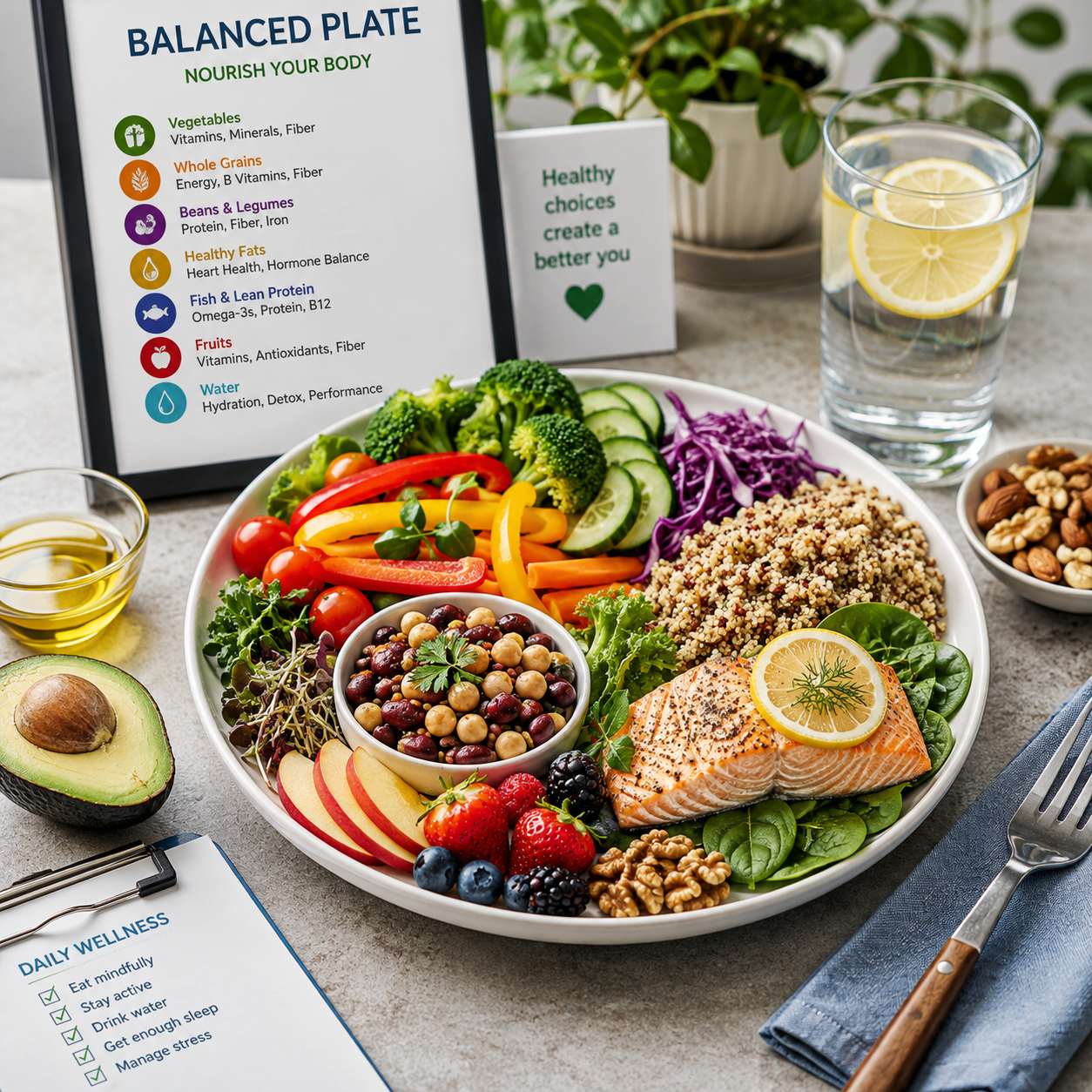
A balanced diet supplies the energy, protein, vitamins, minerals, fiber, and fluids your body needs to function well. It does not require perfect meals or strict rules; it relies on variety, sensible portions, and eating patterns you can maintain over time.
What Is a Balanced Diet?
A balanced diet includes a variety of foods from the main food groups in portions that support energy, growth, repair, and overall health. The foundation is variety, moderation, and nutrient density, adjusted to a person’s needs and preferences.
Balanced eating means combining vegetables and fruit, whole grains or other complex carbohydrates, protein foods, and healthy fats. It also includes adequate hydration and limits the role of foods that are high in added sugar, sodium, or saturated fat without treating them as forbidden.
Think of your eating pattern as a weekly average rather than a single meal. A quick breakfast or occasional dessert will not determine your health by itself. What matters more is the repeated pattern: whether most meals contain useful nutrients, whether portions fit your needs, and whether your choices are realistic for your budget, culture, schedule, and access to food.
Nutrient density is especially helpful when choosing between similar foods. A bowl of plain yogurt with berries and nuts generally provides more protein, fiber, vitamins, and minerals than a sweetened dessert yogurt, even though both may appear in the dairy section.
The Essential Nutrients Your Body Needs
Essential nutrients include macronutrients, micronutrients, fiber, and water. Macronutrients provide energy and building materials, while micronutrients support processes such as immunity, blood formation, bone maintenance, and metabolism.
Macronutrients
- Protein: Protein supports muscles, skin, enzymes, hormones, and immune function. Sources include beans, lentils, eggs, fish, poultry, tofu, dairy foods, nuts, and seeds.
- Complex carbohydrates: Carbohydrates are a major energy source, especially for the brain and active muscles. Oats, brown rice, potatoes, beans, whole-grain bread, fruit, and vegetables also provide fiber and other nutrients.
- Healthy fats: Unsaturated fats help form cell membranes, support hormone production, and help the body absorb fat-soluble vitamins. Olive oil, avocado, nuts, seeds, and oily fish are useful sources.
Carbohydrates, protein, and fat all have a place in a healthy diet. Removing one macronutrient without a clear medical reason can make meals less satisfying or reduce dietary variety. The better question is usually which sources you choose and how much you eat.
Micronutrients, fiber, and water
Vitamins and minerals are needed in smaller amounts, but they are essential. Iron helps transport oxygen, calcium supports bones and teeth, potassium contributes to fluid and nerve function, and vitamin C supports connective tissue and helps improve iron absorption from plant foods.
Fiber supports bowel regularity, helps with fullness, and contributes to healthy blood cholesterol and blood glucose patterns. Adults often benefit from increasing fiber gradually through vegetables, fruit, beans, lentils, nuts, seeds, and whole grains. Drink enough fluid as fiber intake rises.
Hydration supports temperature regulation, circulation, digestion, and concentration. Water is the usual choice, although fluid needs also come from milk, unsweetened drinks, soups, and water-rich foods. Thirst, urine color, climate, exercise, illness, and medications can all affect requirements.
For evidence-based background on dietary patterns and nutrient guidance, readers can consult the U.S. Dietary Guidelines.
Building a Balanced Plate
To build a balanced plate, fill about half with vegetables and fruit, divide the other half between protein foods and whole grains or other complex carbohydrates, and add a modest source of healthy fat. This visual framework offers flexibility without requiring calorie counting.
- Half the plate: Choose a mixture of vegetables and fruit, with vegetables often making up the larger share. Use fresh, frozen, or canned options with little added sodium or sugar.
- One quarter: Add protein such as fish, chicken, eggs, tofu, tempeh, beans, lentils, or lean meat.
- One quarter: Include whole grains, potatoes, corn, brown rice, oats, or another carbohydrate that fits the meal.
- Add healthy fat: Use olive oil dressing, avocado, nuts, seeds, or a small amount of nut butter.
A practical example might be roasted vegetables, lentils, brown rice, and yogurt-tahini sauce. Another could be grilled fish with potatoes, a large salad, and olive oil dressing. The ingredients can change according to cuisine: beans and corn, tofu and noodles, or whole-grain flatbread with hummus can all fit the same structure.
Meals do not need to be perfectly divided. Soup, sandwiches, stews, and mixed dishes can still be balanced when they include several food groups. If a meal lacks vegetables or protein, add them at the next meal rather than trying to correct everything immediately.
Choosing Nutrient-Dense Foods
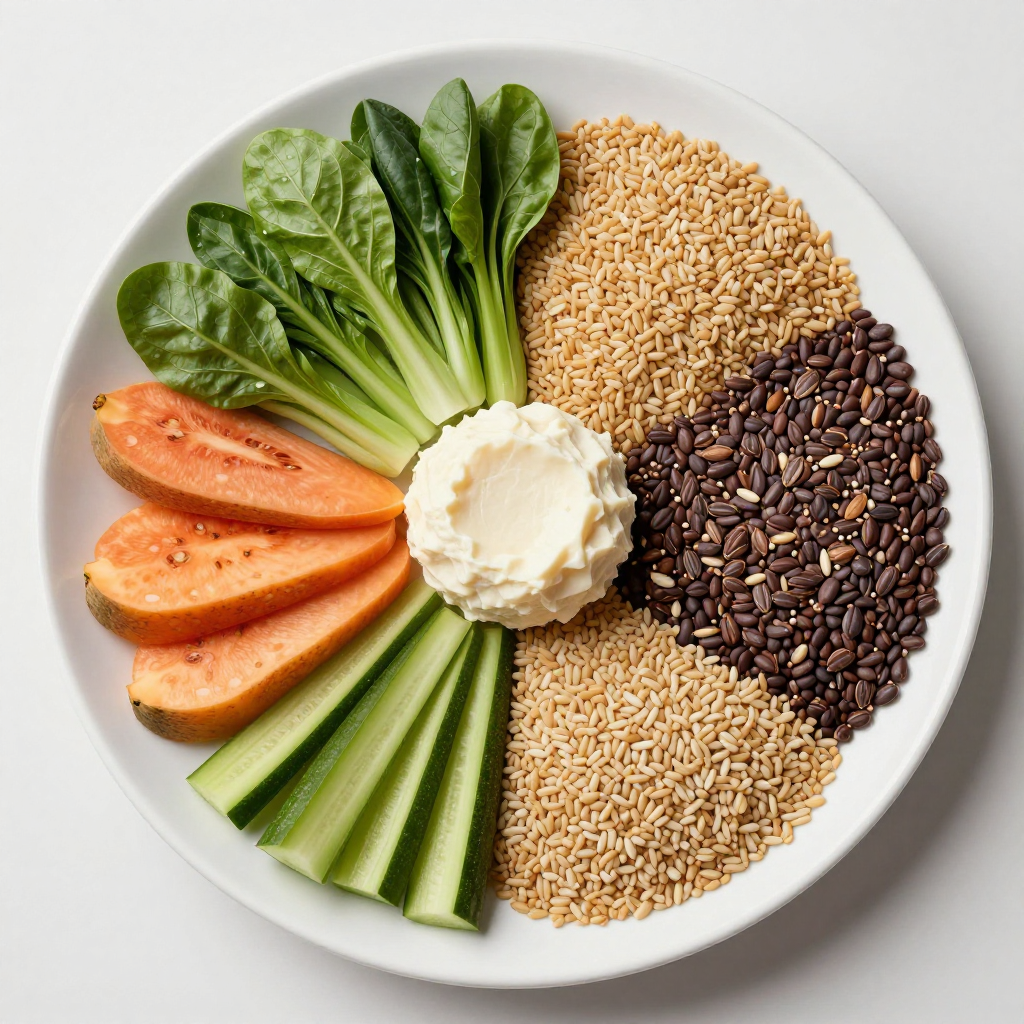
Nutrient-dense foods provide substantial vitamins, minerals, protein, fiber, or beneficial fats for the amount of energy they contain. Prioritize minimally processed foods most of the time, while placing processed foods in context rather than labeling them as automatically harmful.
Useful staples include leafy greens, colorful vegetables, fruit, beans, lentils, whole grains, eggs, fish, plain dairy or fortified alternatives, nuts, and seeds. Frozen vegetables, canned beans, and plain canned fish can be affordable and convenient choices. Rinsing canned beans can reduce some of the added sodium.
Processing exists on a spectrum. Plain rolled oats, whole-grain bread, pasteurized milk, tofu, and frozen vegetables are processed foods, yet they can contribute strongly to a balanced diet. Highly sugary drinks, confectionery, and many packaged snack foods are easier to overconsume because they provide energy with less protein or fiber. Their place depends on frequency, portion, and the rest of the diet.
When comparing packaged products, check the serving size, protein, fiber, added sugars, sodium, and saturated fat. Marketing terms such as natural, light, or multigrain do not automatically describe the food’s overall nutritional value.
Portion Sizes, Meal Planning, and Everyday Habits
Portion control means choosing an amount that matches hunger, activity, health needs, and the food’s role in the meal. It does not require weighing every ingredient; hand-size estimates, smaller serving dishes, and mindful eating can provide useful guidance.
A simple planning routine
- Choose two or three proteins for the week, such as beans, eggs, fish, tofu, or poultry.
- Prepare several vegetables and one or two complex carbohydrates in advance.
- Keep quick foods available, including fruit, yogurt, nuts, hummus, or whole-grain crackers.
- Build meals from what is available instead of following a rigid menu.
Regular meals can help reduce the intense hunger that often leads to rushed choices. Snacks are optional, but they may be useful for children, people with long gaps between meals, or those with higher activity levels. Pairing protein or healthy fat with fiber, such as an apple with peanut butter or yogurt with berries, may be more satisfying than eating a sugary snack alone.
Read food labels with a specific question in mind. If you need more fiber, compare fiber per serving. If you are limiting sodium, check sodium rather than relying on front-of-package claims. Serving sizes are standardized for comparison, not a prescription for how much you must eat.
Small changes are easier to sustain than a complete dietary overhaul. Add one vegetable to dinner, replace one sugary drink with water, or cook one extra portion for tomorrow’s lunch. Repeating a manageable action is usually more valuable than starting an extreme plan and abandoning it within weeks.
Common Nutrition Mistakes and Misconceptions
Common nutrition mistakes include extreme restriction, unnecessary food-group elimination, and trusting health claims without checking the whole food. Correcting these errors usually involves adding flexibility and examining the complete eating pattern.
Following an overly restrictive diet
People may cut out many foods because strict rules appear simple or promise rapid results. The consequence can be low dietary variety, inadequate nutrients, social difficulty, and cycles of restriction followed by overeating. A more reliable correction is to define a few specific goals, retain enjoyable foods in reasonable portions, and seek professional guidance when weight, eating behavior, or symptoms are causing concern.
Eliminating an entire food group without a clear reason
Removing carbohydrates, dairy, grains, or another group may seem necessary after hearing broad claims online. It can reduce sources of fiber, calcium, or other nutrients and make meals harder to plan. Elimination may be appropriate for a diagnosed allergy, intolerance, or medical condition, but it should be replaced with suitable alternatives rather than handled casually.
Confusing a healthy label with a healthy meal
A product labeled organic, gluten-free, or low-fat can still be high in added sugar or low in protein and fiber. The fix is to inspect the ingredient list and Nutrition Facts panel, then consider how the product fits the entire meal.
Adapting Nutrition to Individual Needs
Nutrition needs vary with age, body size, activity level, pregnancy, medical conditions, allergies, medications, cultural preferences, and dietary patterns. A balanced diet therefore has a common foundation but should not be treated as one identical menu for everyone.
An athlete may need more carbohydrate around training. An older adult may need deliberate attention to protein, hydration, and calcium. Someone with diabetes, kidney disease, high blood pressure, celiac disease, or a food allergy may need specific adjustments. Vegetarian and vegan diets can be well planned, but nutrients such as vitamin B12, iron, calcium, iodine, vitamin D, and omega-3 fats deserve attention.
Seek advice from a doctor or registered dietitian for pregnancy, unexplained weight change, persistent digestive symptoms, food allergies, eating concerns, chronic disease, or a medically prescribed diet. Individualized care is especially important before using supplements or making major dietary restrictions. General nutrition guidance can support health education, but it cannot replace clinical assessment.
Frequently Asked Questions
What does a balanced meal include?
A balanced meal usually includes vegetables or fruit, a protein food, a complex carbohydrate or whole grain, and a small source of healthy fat. Mixed dishes can meet the same goal when they contain several food groups.
How much protein, carbohydrate, and fat should a person eat?
There is no single ideal amount for everyone. Requirements depend on age, activity, health status, body size, pregnancy, and dietary pattern. A varied plate and professional advice for medical needs are more useful than rigid targets taken out of context.
Are carbohydrates part of a healthy diet?
Yes. Carbohydrates are an important energy source. Emphasize fiber-rich choices such as beans, fruit, vegetables, oats, potatoes, and whole grains, while limiting sugary drinks and highly refined snack foods.
How can someone improve their diet gradually?
Start with one change that can be repeated, such as adding vegetables to lunch, drinking more water, planning protein for dinner, or replacing refined grains with whole grains. Review progress after two or three weeks and choose the next small step.
When should someone consult a doctor or registered dietitian?
Consult a qualified healthcare professional for chronic disease, pregnancy, allergies, suspected nutrient deficiency, significant digestive symptoms, unintentional weight change, eating concerns, or a specialized dietary pattern. Professional support can make nutrition safer and more personal.